
How to Measure (and Mark) a 45-Degree Angle
What a 45-degree angle is
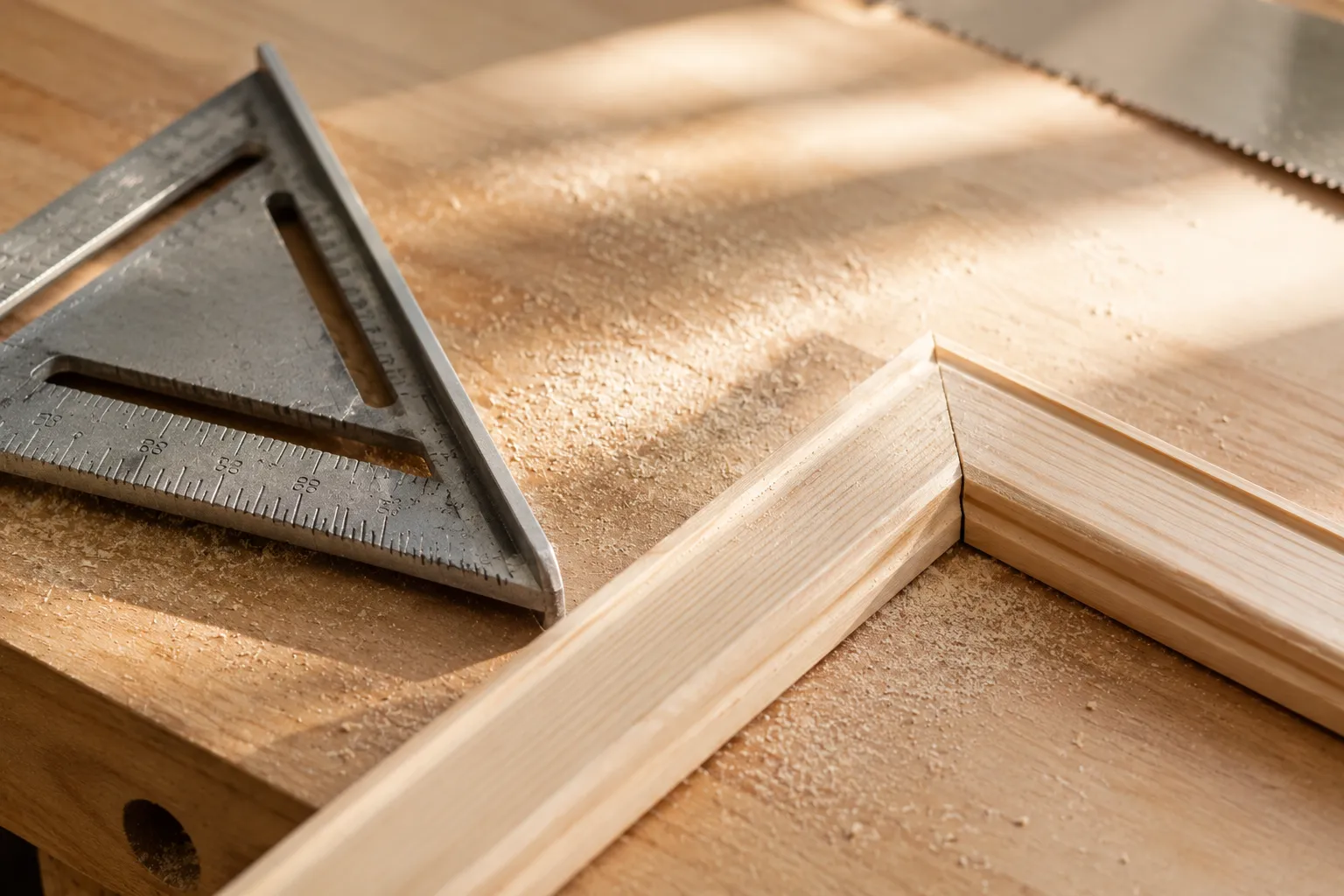
A 45° angle is half of a right angle. A square corner measures 90°, and slicing it straight down the middle gives two equal 45° angles — the diagonal of a square. That’s why 45° shows up everywhere in building: two 45° miters meet to wrap a 90° corner, which is how picture frames, trim, and boxes get their clean corners.
Because it’s such a common cut, almost every measuring tool has 45° built in. Here are five ways to get one.
1. With a protractor
Draw a baseline, mark the vertex, center the protractor on it, and make a dot at 45° on the scale that starts at 0° along your baseline. Connect the vertex to the dot. The full technique is in how to use a protractor, and you can practice it on the online protractor first.
2. With a speed square
A speed square (rafter square) has a 45° edge as part of its triangle. Hook the lipped edge over the side of a board and scribe along the angled edge — instant 45° line, no measuring. It’s the fastest method for repeat cuts.
3. With a combination square
Set a combination square to its 45° face (the angled shoulder of the head), butt the head against the board’s edge, and mark along the blade. Combination squares are machined accurately, so this is a reliable shop-grade 45°.
4. The paper-fold trick (no tools)
No square handy? Take any sheet with a true 90° corner. Fold that corner so one straight edge lands exactly on the other, and crease it flat. The crease bisects the 90° corner, so it’s a clean 45° you can lay against your work and trace.
5. With your phone
To check a 45° angle — or set a saw bevel — rest an iPhone on the cut face and the app reads the tilt in degrees. Adjust until it shows 45.0° and you’re square to the diagonal. It works as a digital angle finder for any angle, not just 45°; see the tools that measure angles for when each is best.
How to check a 45-degree miter is true
The real test of a 45° cut is the joint:
- Hold two pieces together. Two true 45° miters form a crisp 90° corner. A gap on the inside means the angles are over 45°; a gap on the outside means they’re under.
- Test against a square. Put a framing square into the assembled corner — it should sit flush on both legs.
- Read each face. Rest the phone on each cut and confirm 45.0°, then dial the saw in by the difference.
Measure it once with whichever tool is closest to hand, then let the joint confirm it — a corner that closes with no gap is the only proof that matters.
Frequently asked questions
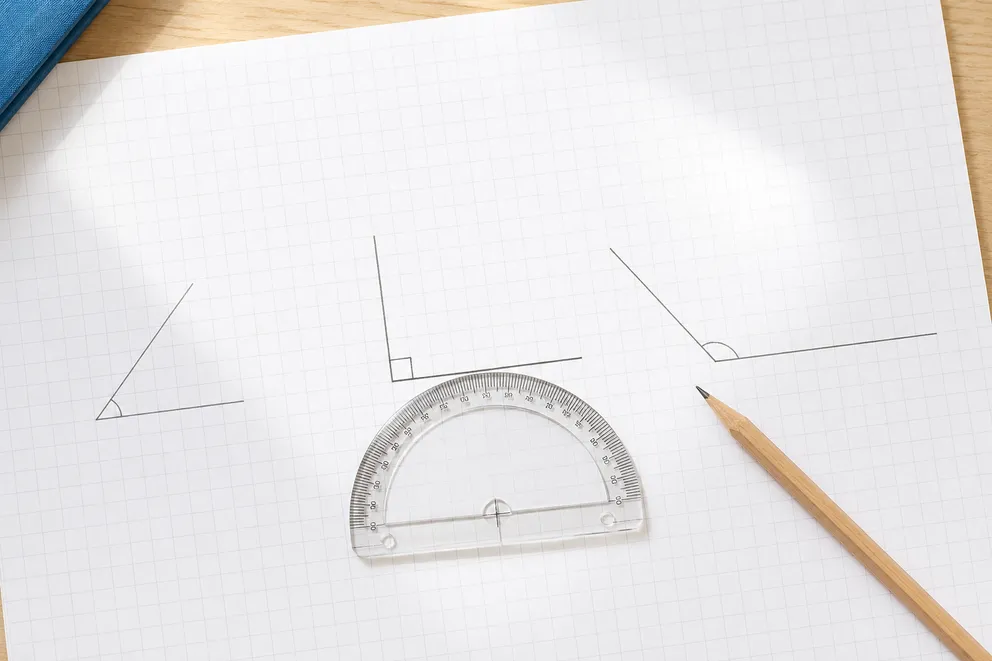
Types of Angles Explained (Acute, Right, Obtuse & More)
A clear guide to the types of angles by degree — acute, right, obtuse, straight, reflex, and full — with everyday examples and how to tell them apart at a glance.
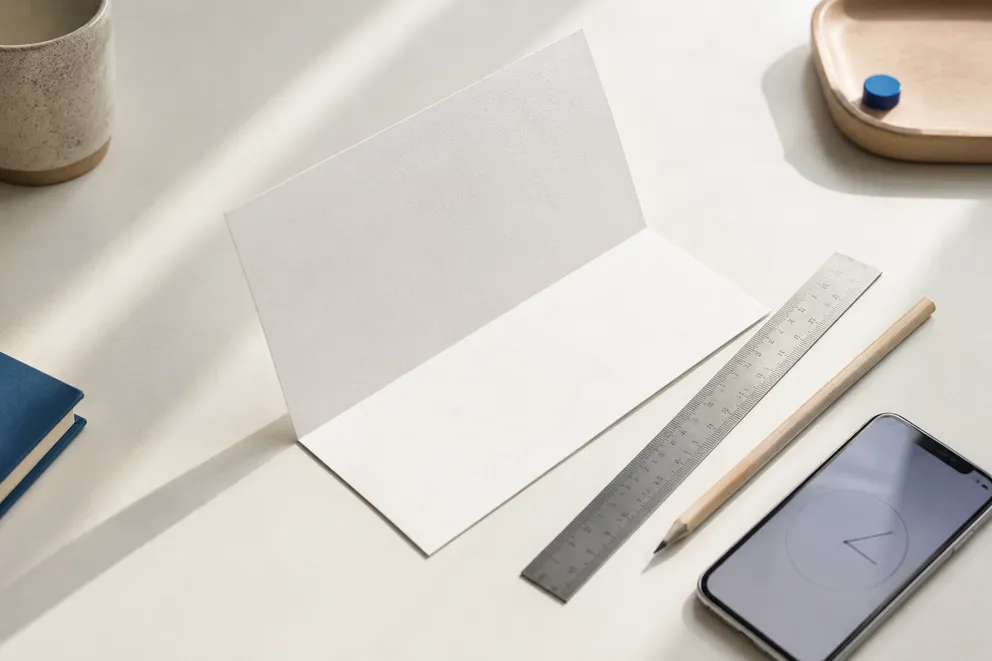
How to Measure an Angle Without a Protractor
No protractor? Measure an angle with your phone, simple trigonometry, or a folded sheet of paper. Practical methods that work for school, DIY, and woodworking.
Measure any angle,
right from your pocket.
Protractor turns your iPhone into a precision angle finder, level and inclinometer. Measure anything, anywhere.
Download the App